




Update — 24 July 2026: FDA advisory committee votes on seven peptides
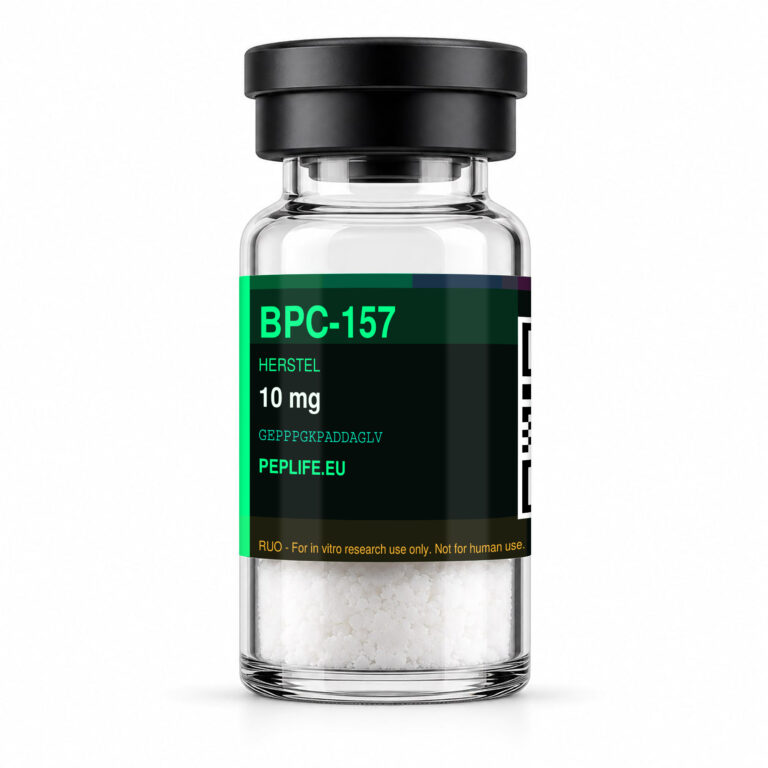
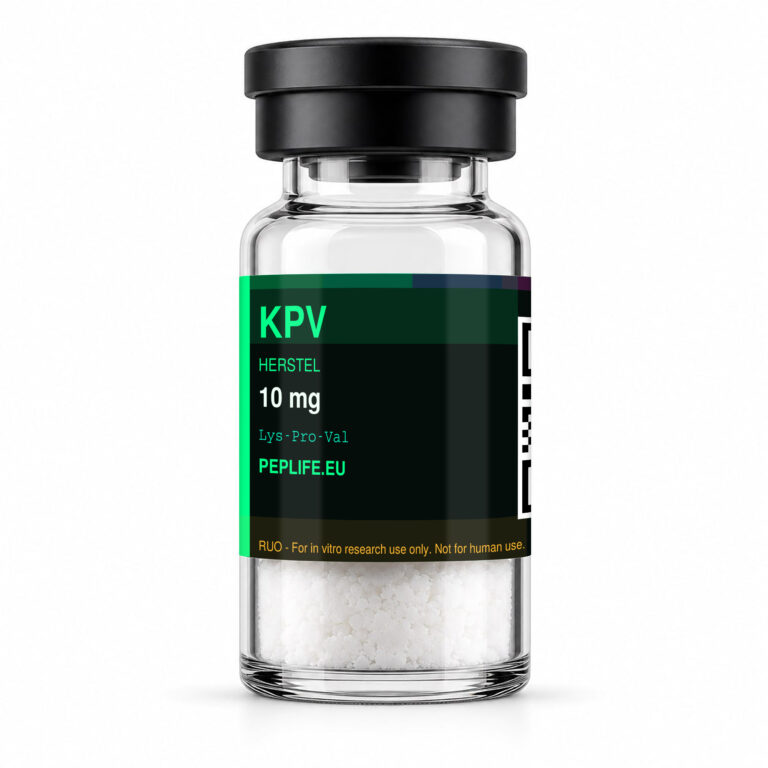
On 23 and 24 July 2026 the FDA advisory committee for compounding pharmacies (PCAC) voted on seven peptides. Six received a positive recommendation for the 503A bulks list. BPC-157 got 8 votes in favour, 6 against and 1 abstention. KPV and TB-500 ended on the same result: 8-6-1. MOTS-c was 7-5-2, Semax 8-5-1 and Epitalon 7-4-1. Only emideltide, better known as DSIP, did not make it: 6 votes in favour, 7 against and 1 abstention.
What such a listing means: compounding pharmacies in the United States may then prepare the substance on prescription. It is not an approval as a medicine. It also says nothing about proven efficacy or safety.
Three nuances belong with this. First, the recommendation is not binding. The FDA still has to complete a formal procedure with public consultation. That could happen in 2027, or stretch into a process lasting several years. Second, the FDA's own scientists advised against all seven substances. Their objection was that the research was too short and had too few participants. It is rare for an advisory committee to vote against such written staff advice. Third, this vote applies solely to the United States.
For BPC-157 in 2026 it comes down to this: a narrow positive vote by an advisory committee, no FDA approval and no change whatsoever in Europe. In the EU the status remains unchanged. At Peplife, BPC-157, KPV, TB-500, MOTS-c, Semax and Epitalon remain Research Use Only: intended for laboratory research, not for human or animal use.
Sources: FDA meeting page of the PCAC, 23 and 24 July 2026 · AJMC report of 31 July 2026 · analysis by McDermott Will & Emery, 27 July 2026 · RAPS news report.
In brief · RUO
- Online you'll read that "the FDA is going to allow peptides for human use." That is misleading as stated.
- What is actually happening: an FDA advisory committee (PCAC) meets on 23–24 July 2026 to consider whether some peptides should be eligible to be compounded by pharmacies (503A) — a legal track distinct from approval.
- Compounding eligibility ≠ approval as a drug. Even a favorable vote only leads to something concrete after ~1+ year of rulemaking.
- FDA's own scientists advised against it ("insufficient evidence"); the political push comes from HHS Secretary R.F. Kennedy Jr., not FDA staff.
- The EU has no equivalent of this 503A system; US developments do not change EU status. Peplife supplies strictly Research Use Only — no human use.
Where does this story come from?
Since early 2026, headlines claim peptides are "becoming legal" or that "the FDA is allowing them for human use." The reality is narrower and more technical — which is exactly why it's worth understanding. This article explains it factually, with sources.
What is "compounding"? Compounding is a pharmacy preparing a medicine to order for an individual patient, outside standard factory manufacturing. In the US, section 503A governs which bulk substances may be used. This is separate from whether a substance is approved.
Under the hood: three legal tracks
The whole story becomes clear once you separate three tracks that often get confused:
1. Approved drug — the FDA approved it after clinical trials (e.g., semaglutide as Ozempic/Wegovy). Fully legal for the approved indication.
2. Permitted in compounding (503A) — not an approval, but a pharmacy may compound the raw ingredient on prescription. More limited and conditional; only if the ingredient is on an approved list.
3. Not permitted — the substance is on no list and may not be sold or prepared as a drug.
The entire 2026 debate concerns track 2 for a handful of "wellness" peptides — not track 1.
What does "Category 2" mean? Within 503A the FDA sorts nominated substances into categories. Category 2 = "significant safety risk" → not permitted for compounding. Being removed from Category 2 is therefore not the same as "approved" — it only means the status is being re-evaluated.
What factually happened (2023 → 2026)
- September 2023: the FDA placed several peptides (including BPC-157 and TB-500) in Category 2 — "significant safety risk," not permitted for compounding (FDA).
- April 2026: the FDA removed seven peptides (BPC-157, TB-500, MOTS-c, KPV, Semax, DSIP/emideltide, epitalon) from Category 2 — but because the underlying nominations were withdrawn, a procedural reset, not an endorsement (National Law Review; RAPS).
- 23–24 July 2026: the Pharmacy Compounding Advisory Committee (PCAC) meets to consider whether these peptides may go on the official 503A list (FDA agenda). A second panel (incl. GHK-Cu, Melanotan II, LL-37, PEG-MGF) is planned before end of February 2027.
Status overview: where does each peptide really stand?
| Peptide | Actual FDA status (2026) | Meaning |
|---|---|---|
| BPC-157 | not approved; not a legal supplement; nomination withdrawn; on PCAC agenda July 2026 | ter under consideration for compounding, not approved |
| TB-500 (Tβ4 fragment) | removed from Category 2 (nomination withdrawn); PCAC July 2026 | review, not approval |
| MOTS-c | removed from Category 2; PCAC July 2026 | idem |
| KPV | removed from Category 2; PCAC July 2026 | idem |
| Semax | removed from Category 2; PCAC July 2026 | idem |
| DSIP (emideltide) | removed from Category 2; PCAC July 2026 | idem |
| Epitalon | removed from Category 2; PCAC July 2026 | idem |
| GHK-Cu | nomination withdrawn; second panel before Feb 2027 | later review |
| Ipamorelin | still Category 2 | not permitted for compounding |
| Kisspeptin-10 | still Category 2 | not permitted |
| GHRP-2 / GHRP-6 / ibutamoren | still Category 2 | not permitted |
| Semaglutide / Tirzepatide | approved drug; compounding discretion ended 2025 | track 1 (approved), no broad compounding |
Why "the FDA is allowing them" is wrong
- The FDA's own scientists concluded there is insufficient evidence for safety/efficacy and advised against loosening; the push comes from HHS Secretary R.F. Kennedy Jr., not FDA staff (NPR; STAT).
- Even a favorable PCAC vote only starts a rulemaking process realistically a year or more long.
- There is still no GMP bulk substance from FDA-registered makers and no valid CoA chain — so compounding is not permissible now anyway.
⚠ What is NOT true (common online mistakes): - ❌ "The FDA is approving peptides for human use." — No; it's a compounding review, a different track. - ❌ "Peptides became legal in 2026 / RFK legalized them." — No; removal from Category 2 was a procedural reset from withdrawn nominations. - ❌ "BPC-157 is FDA-approved / a legal supplement." — No, both false; it is an unapproved drug. - ❌ "BPC-157 has passed human trials." — Not established by authoritative sources; such claims come from vendor/clinic blogs. - ❌ "A PCAC vote = approval." — No; at most it starts rulemaking that takes 1+ year and would only permit compounding .
And BPC-157?
BPC-157 is often presented online as "approved" or "a legal supplement." Both are false: it is an unapproved drug, explicitly None a lawful dietary supplement, and the FDA cautioned against compounded BPC-157 (DoD OPSS). Claims of "first human safety data" appear only on vendor/clinic blogs, not authoritative sources.
What does this mean for the EU?
Since 1 June 2026 the EU does have a framework of its own for the quality of synthetic peptides: the EMA guideline EMA/CHMP/CVMP/QWP/367182/2025. It covers what a manufacturer has to demonstrate at registration, not access outside registration. More on that in our article on the EMA guideline on synthetic peptides.
The EU has None system resembling 503A; preparation is regulated nationally/per pharmacy. US compounding developments therefore do notchange the European status of these substances. For EU researchers these peptides remain Research Use Only — for laboratory research, not human use.
Nuance & limitations
- This is policy in motion. Data, agendas and category placements can change; always check the primary source (FDA/EMA) for the current position.
- "Consider" ≠ "decide". A PCAC meeting is advisory, not a final decision.
- US ≠ EU. US compounding rules say nothing about European status.
- Research status ≠ market status. A peptide being interesting in research says nothing about whether it is permitted as a drug.
Related on Peplife · RUO
- Knowledge base: What are RUO peptides?, Reading a CoA/HPLC lab test, Why we rejected a batch (internal pillars on quality and provenance).
- Why this matters: precisely because the market is unclear and full of counterfeits, Peplife centers provenance, independent testing and a CoA per batch.
Frequently asked questions
Is the FDA going to approve peptides for human use?
No. The current step is a review of whether some peptides are eligible for pharmacy compounding — a different track from approval.
Did peptides "become legal" in 2026?
No. Removal from Category 2 was a procedural reset from withdrawn nominations; these peptides remain unapproved.
Is BPC-157 FDA-approved?
No — it is an unapproved drug and not a legal supplement.
Which peptides are still on Category 2?
Among others ipamorelin, kisspeptin-10, GHRP-2/6 and ibutamoren — not permitted for compounding.
Does this change anything in the EU?
No — the EU has no 503A equivalent; these substances remain Research Use Only.
Disclaimer
This article discusses regulation and news and is informational only. It is not legal, medical, or usage advice. The substances mentioned are supplied by Peplife strictly as Research Use Only (RUO) for laboratory research, not human use. Status and data may change; check the primary sources (FDA/EMA) for the current position.