




| Aliases | Ozempic, Wegovy |
| Class | GLP-1 agonist |
| Molecular weight (Da) | 4113.6 |
| Half-life (indicative) | ~7 d |
| Research status | Approved drug |
Research context (RUO): Semaglutide is a long-acting GLP-1 receptor agonist studied worldwide in clinical and preclinical studies in the areas of metabolism, weight regulation and cardiovascular outcomes. At Peplife, semaglutide is supplied solely for in-vitro laboratory research and not for human or animal use.
Semaglutide research: from SUSTAIN and STEP to the SELECT study
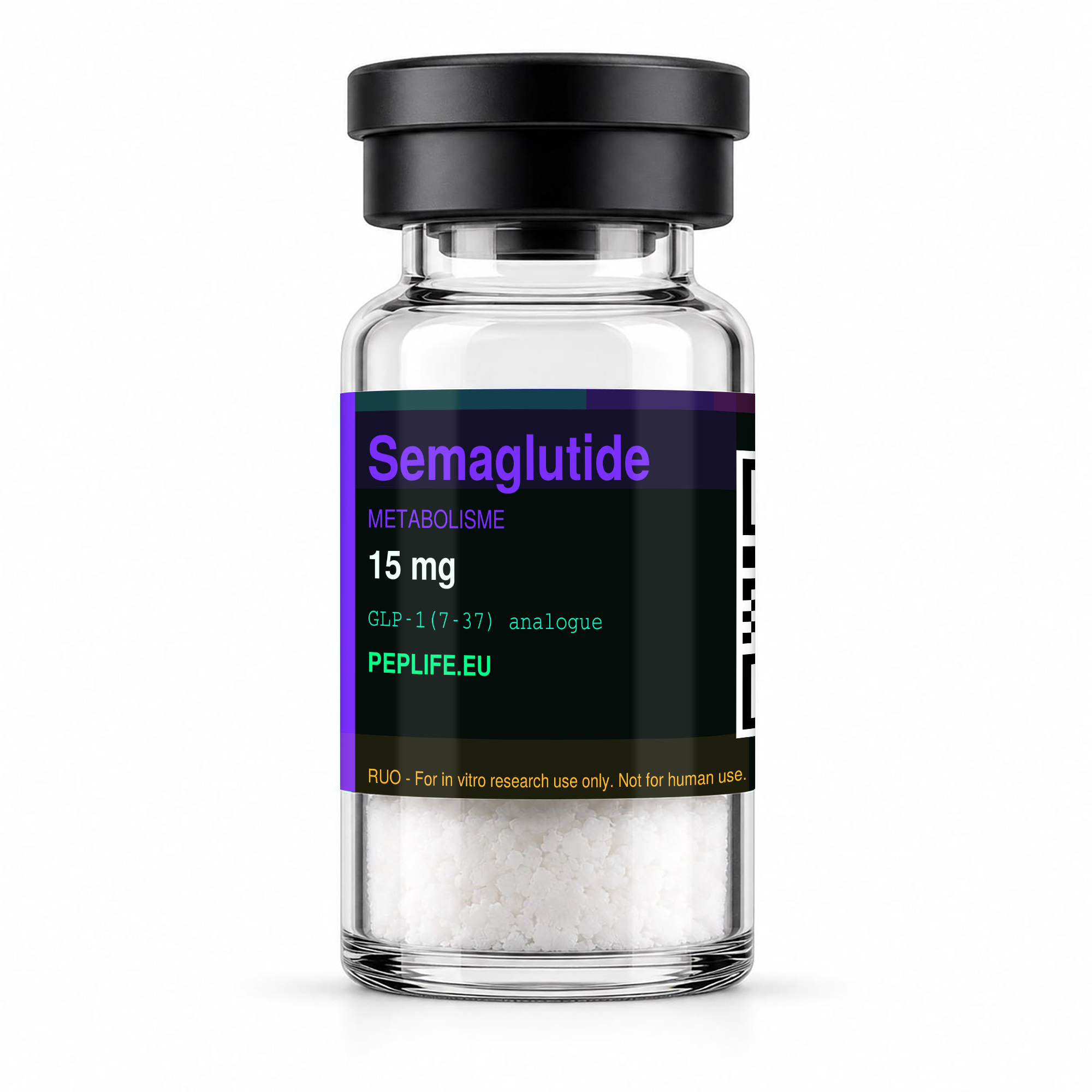
Semaglutide research is among the best-documented peptide programmes of the past decade. Semaglutide is the active substance behind brand names such as Ozempic and Wegovy and has been studied in dozens of phase 3 studies with tens of thousands of participants for metabolic and cardiovascular outcomes. For research laboratories it is therefore one of the most-studied reference peptides within the class of GLP-1 receptor agonists. This pillar lays out the published research: the mechanism, the main study programmes (SUSTAIN, STEP and SELECT) and the research areas in which semaglutide is central today.
What is semaglutide?
Semaglutide is a synthetic peptide derived from the human hormone GLP-1 (glucagon-like peptide-1), a so-called incretin that is released in the gut after a meal. Natural GLP-1 is broken down within a few minutes by the enzyme DPP-4. Researchers have modified the amino-acid structure of semaglutide in a few places and attached a fatty-acid chain, which makes the molecule bind to albumin in the blood and remain stable for much longer. That property enables a once-weekly dosing interval in clinical research. In the chemical databases semaglutide is registered under PubChem CID 56843331, with molecular formula C187H291N45O59.
How does semaglutide work? — the mechanism
Semaglutide is an agonist of the GLP-1 receptor, which means the molecule activates this receptor as if it were the body's own GLP-1. In research models it is described that activation of the GLP-1 receptor acts at several sites at once: on the beta cells of the pancreas, where it stimulates glucose-dependent insulin release; on the stomach, where gastric emptying is slowed; and on receptors in the central nervous system involved in appetite and satiety. In preclinical studies this interplay is associated with a lower food intake and an improved glucose balance. Because insulin release is glucose-dependent, researchers report in the clinical literature a relatively low risk of hypoglycaemia with monotherapy — a property that distinguishes semaglutide from classic insulin preparations.
What is semaglutide studied for?
Semaglutide research has fanned out from diabetes to weight regulation and cardiovascular disease. The main research areas:
- Glycaemic control (SUSTAIN programme): in the SUSTAIN-6 study (Marso et al., NEJM 2016), semaglutide was investigated for cardiovascular safety in people with type 2 diabetes; researchers reported a reduction in cardiovascular endpoints relative to placebo.
- Weight regulation (STEP programme): in the STEP 1 study (Wilding et al., NEJM 2021) with semaglutide 2.4 mg per week, an average weight loss of about 14.9% was reported in adults with overweight or obesity, versus 2.4% in the placebo group.
- Cardiovascular outcomes (SELECT study): in the SELECT study (Lincoff et al., NEJM 2023) with 17,604 participants without diabetes but with existing cardiovascular disease, a reduction of about 20% in major adverse cardiovascular events (MACE) was associated with semaglutide 2.4 mg (hazard ratio about 0.80).
- Metabolic and related areas: researchers are additionally studying whether GLP-1 receptor agonists such as semaglutide have effects on fatty liver (NAFLD/MASH), kidney function and inflammation markers; this research is partly still ongoing.
Important from an RUO perspective: these outcomes derive from controlled clinical studies and describe what was observed in those study populations. They do not constitute usage or dosing advice.
Semaglutide in laboratory research: handling & dissolving
Semaglutide is supplied as a freeze-dried (lyophilised) powder in a vial. In a research setting the peptide is reconstituted with a suitable liquid before it can be used in in-vitro experiments. Which liquid researchers choose for this and why is covered extensively in the knowledge-base pillars reconstitute peptides and dissolve peptide: which liquid. Lyophilised semaglutide is usually stored cool and dark; after reconstitution, refrigeration is customary to preserve the stability of the peptide. This concerns laboratory handling, not an instruction for administration.
Semaglutide compared with other metabolism peptides
Semaglutide is a mono-agonist: it activates only the GLP-1 receptor. Newer research molecules combine multiple receptors. Tirzepatide, for example, acts on both GLP-1 and the GIP receptor, and retatrutide is a tri-agonist that additionally engages the glucagon receptor. How these molecules relate to each other in research is covered in the pillars semaglutide vs tirzepatide and comparing GLP-1 peptides. Laboratories that use semaglutide as a reference often study in parallel tirzepatide and the amylin analogue cagrilintide. For the broader context of fat-metabolism research, the pillars fat-loss peptides and retatrutide research relevant.
Quality & purity
Every relevant batch of semaglutide is independently HPLC-tested by an external laboratory; the certificate of analysis (CoA) is publicly verifiable per batch. For research this is essential: only with a known, verified purity are experimental results reproducible and mutually comparable. Peplife documents why quality control is so strict in the pillar why we rejected a batch.
Frequently asked questions about semaglutide research
What is the difference between semaglutide, Ozempic and Wegovy?
Semaglutide is the active substance; Ozempic and Wegovy are two brand names under which pharmaceutical companies market semaglutide, in different strengths and registrations. In laboratory research one works with semaglutide as a raw material, not with the brand products.
What is a GLP-1 receptor agonist?
That is a molecule that activates the GLP-1 receptor, the same receptor that the body's own hormone GLP-1 engages. Semaglutide is a long-acting example of this that was administered once a week in studies.
What did the STEP 1 study show?
In the STEP 1 study (NEJM 2021), researchers reported an average weight loss of about 14.9% in adults with overweight or obesity with semaglutide 2.4 mg per week, versus 2.4% with placebo, each alongside a lifestyle programme.
What is the significance of the SELECT study?
The SELECT study (NEJM 2023) investigated cardiovascular outcomes in over 17,000 people with overweight or obesity and existing cardiovascular disease, but without diabetes. Researchers associated semaglutide with a reduction of about 20% in major cardiovascular events — the first large programme to describe a cardiovascular benefit of this class outside diabetes.
How does semaglutide differ from tirzepatide?
Semaglutide activates only the GLP-1 receptor, whereas tirzepatide engages both the GLP-1 and the GIP receptor. In the pillar semaglutide vs tirzepatide the study results of both molecules are placed side by side.
May Peplife's semaglutide be used for human use?
No. All products are supplied solely for in-vitro laboratory research and are not intended for human or animal use, diagnostics or therapy.
Read more & research at Peplife
- Research Semaglutide at Peplife
- View all metabolism peptides
- Semaglutide vs tirzepatide: the research compared
- comparing GLP-1 peptides
- Fat-loss peptides in research
- Retatrutide research
- Research Tirzepatide at Peplife
- Research Cagrilintide at Peplife
Sources: Wilding et al., STEP 1, NEJM 2021 (PubMed) · Lincoff et al., SELECT, NEJM 2023 (PubMed) · Marso et al., SUSTAIN-6, NEJM 2016 · PubChem CID 56843331 — Semaglutide
Research Use Only. All products are supplied exclusively for in vitro laboratory research. Not intended for diagnostic or therapeutic use in humans or animals, and not approved by the EMA or FDA.
Peplife's semaglutide is HPLC-tested by an external laboratory, with a publicly verifiable CoA per batch and discreet EU shipping.